Hungarian Genealogy Research
Your family left Hungary. The records did not.
What makes Hungarian research different
Most people who start looking for Hungarian ancestors reach the same wall at roughly the same point. The American records run out, and what lies beyond them does not work the way they expect.
Records are organised by place, not by name. Until 1895 there was no civil registration. Births, marriages and deaths were written down by the local parish — Roman Catholic, Greek Catholic, Reformed, Lutheran or Jewish — and each congregation kept its own books. Until you know the village, there is nothing to search.
The country changed shape. After 1920, much of the historic Kingdom of Hungary became part of Slovakia, Romania, Ukraine, Serbia, Croatia and Austria. The registers went with the territory. Your ancestor left Hungary, but the book recording their birth may now sit in a Slovak or Romanian archive, catalogued under a name your family never used.
Online coverage is uneven. Some collections are fully digitised. Others exist only on microfilm, or only in the archive itself. Indexes are incomplete and often mis-transcribed, so a search that returns nothing frequently means the index is wrong, not that the record is missing.
This is why Hungarian lines stall. Not because the records were destroyed — most of them survive — but because reaching them means working in the archives themselves.
How I work
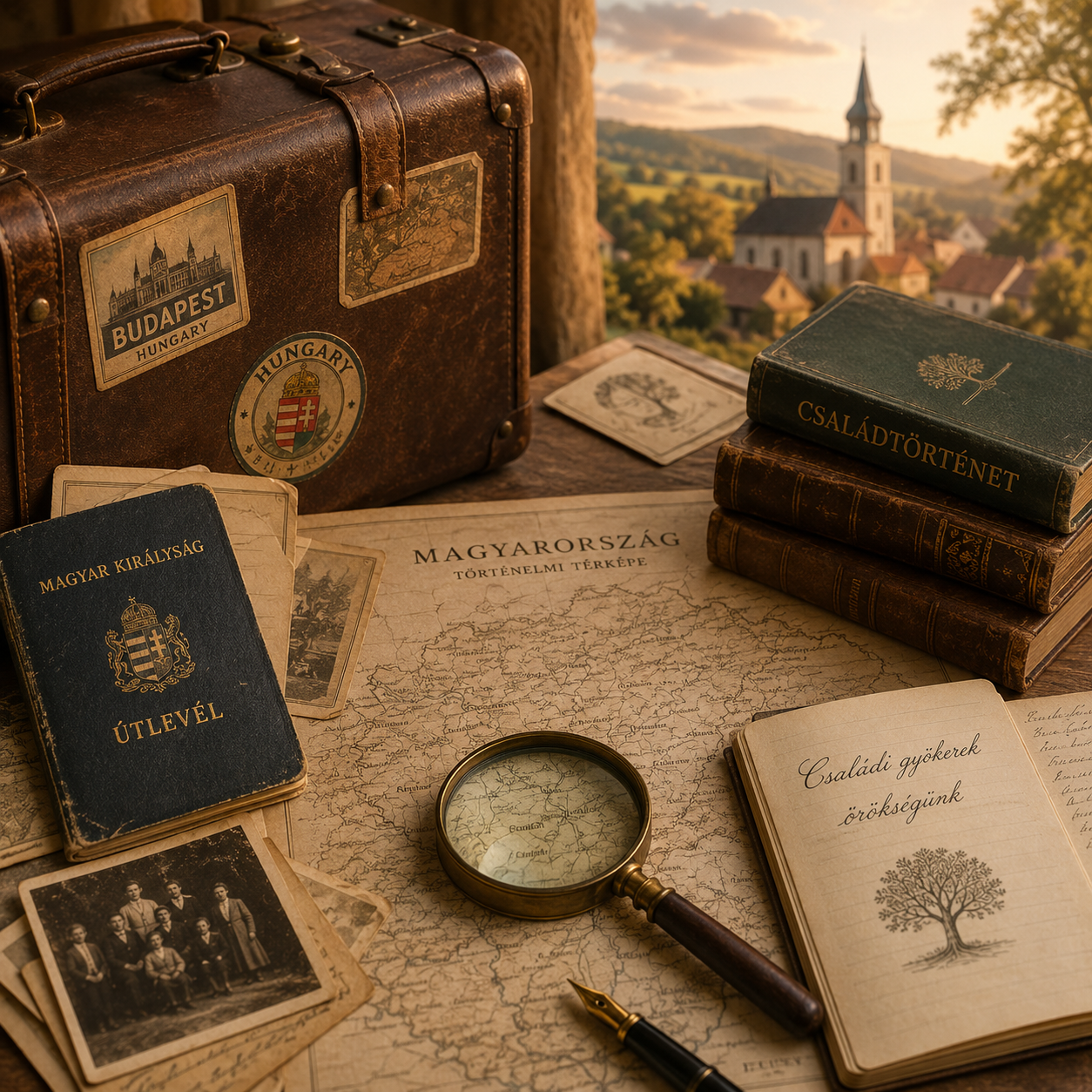
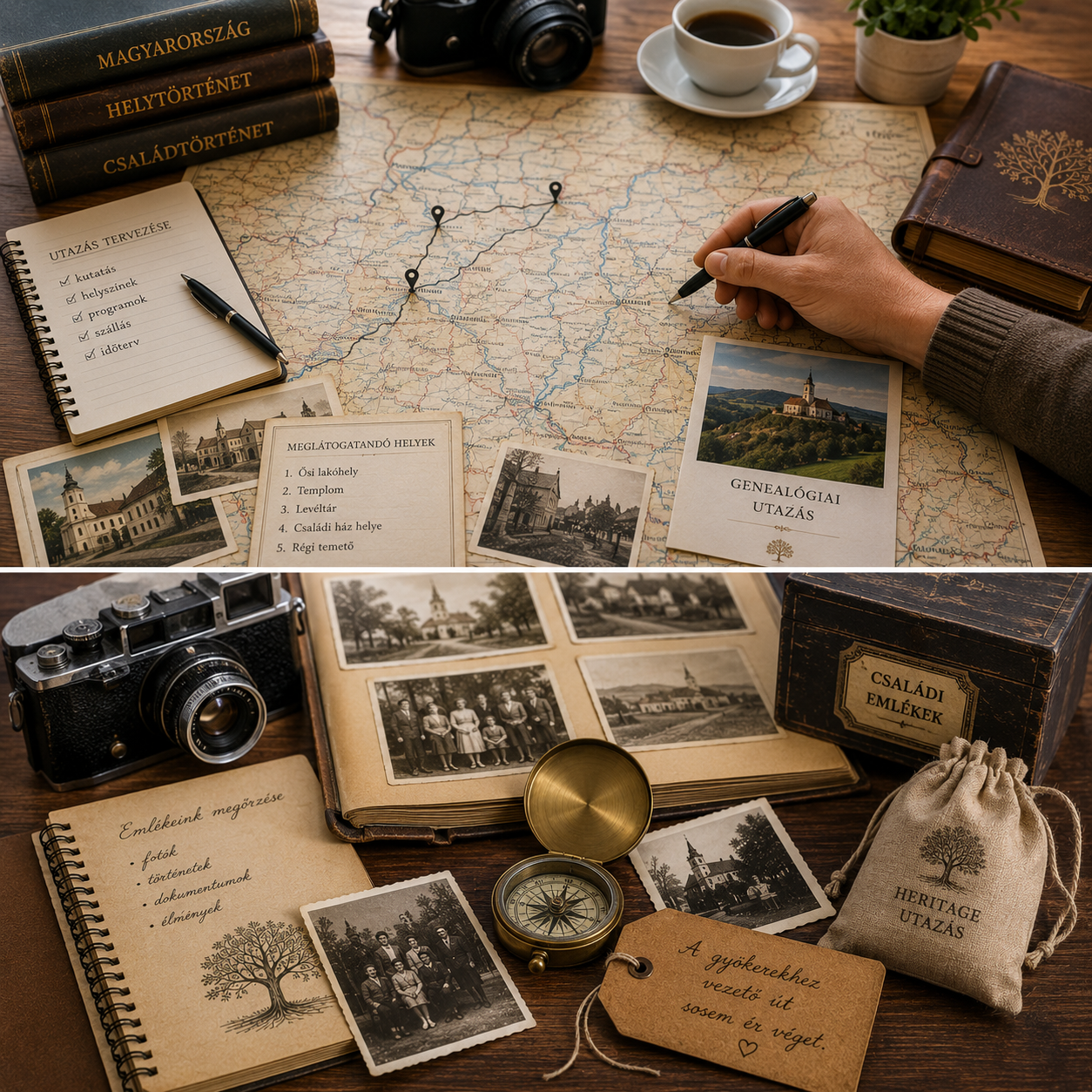
I work from the original registers rather than from indexes. I know the historic counties as they existed before 1920, which is what determines where a record is held today. Where a collection has not been digitised, I correspond with the archive or go there.
Every finding is cited: which register, which parish, which year and entry. You can verify any of it, and so can any researcher who comes after me.
Where a line cannot be traced further, I say so, and I explain what was searched. That is a more useful answer than an uncertain one.
Research services
Place of origin — 125 EUR
Identifying the village your ancestor came from, its name and country today, the parish it belonged to, and where its registers are held now. The smallest useful first step, and the foundation everything else is built on.
Discovery Report — from 200 EUR
An introductory research covering the first generations in Hungary: the ancestor who emigrated, their parents, and the records that document them. Written report with full source citations. The right choice when you want to know what is realistically available before committing further.
Family Tree Research — from 400 EUR
Multi-generation research tracing your lines back through the parish registers as far as the records allow, usually into the eighteenth century. Full documentation, transcriptions of the key entries, and a report in English.
Archival records for citizenship applications — from 95 EUR
Locating and obtaining specific documents needed for a citizenship file.
Family heritage projects
Research turned into something a family can keep: a printed family tree, a family history book, or a film. Quoted individually.
What you receive
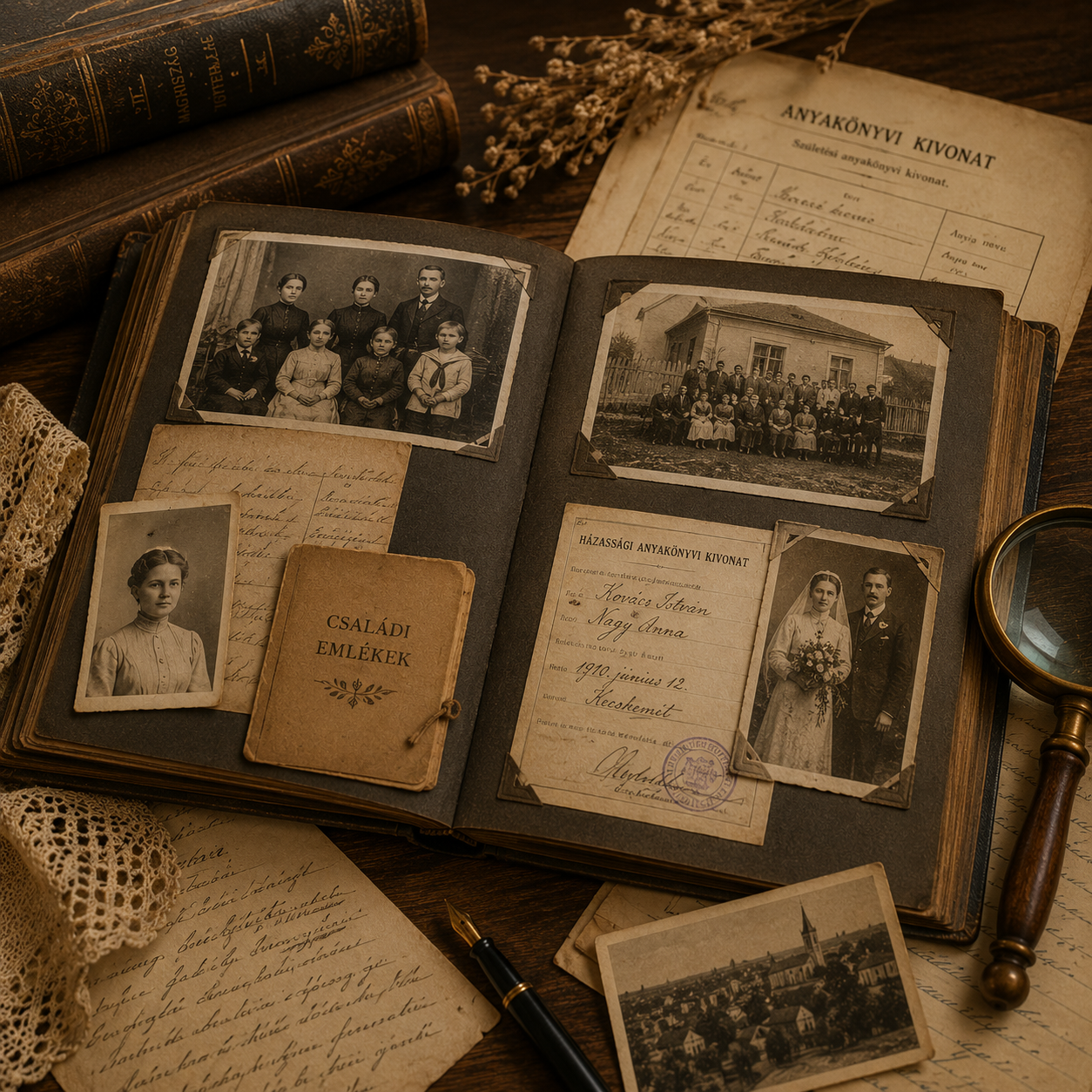
- A written report in English, structured generation by generation
- Full source citations — register, parish, year, entry
- Transcriptions and translations of the key entries
- Scans of the original record images where the collection permits
- An honest account of what could not be established, and why
How it works
- You write to me with whatever you have. No cost, no obligation.
- I assess it honestly — what is likely to be findable, what is not, and what it would cost. If I don’t think the research is viable, I tell you before you pay.
- You choose the level of research that fits what you want to know.
- I carry out the work and keep you informed as it progresses.
- You receive the report, and can continue further at any time.
Most clients start small and go deeper once they see what is there.
Who I am
My name is József Huszin. I have been researching Hungarian family history for 39 years — professionally and, long before that, out of curiosity about my own family, which came from the Tokaj wine region.
I am based in Hungary and work in the archives here. Correspondence and reports are in English.
I work with private clients in the United States, Canada and elsewhere, and as a research partner for genealogy firms and immigration practices.
Common questions
How far back can you go?
Where the registers survive, the eighteenth century is typical, and some lines reach further. Survival varies by parish and denomination — some books were lost to war or fire. I can usually tell you what exists for a given village before you commit.
All I know is that they came from “Hungary” or “Austria-Hungary.”
That is where most people start. Combined with a name, an approximate date and a religion, it is often enough to narrow the search. Send me what you have and I will tell you honestly.
What if the village is now in Slovakia or Romania?
That is very common and entirely workable. It changes which archive holds the records, not whether they can be found.
I’ve already done research. Can you continue from where I stopped?
Yes, and that is often the most efficient way to work. Send me what you have, including the dead ends.
Do you work from DNA results?
DNA can suggest where to look, but a family tree is built from documents. If you have test results, send them along — they are useful context, not a substitute for records.
How long does it take?
A Discovery Report is typically three to five weeks. Deeper research depends on how much of the material is digitised and how quickly archives respond.
Start your research
Tell me what you know about your Hungarian ancestor. I will tell you honestly what is possible — that costs nothing.
Email: info@familyrootsstudio.com
Phone / WhatsApp: +36 70 703 7788